
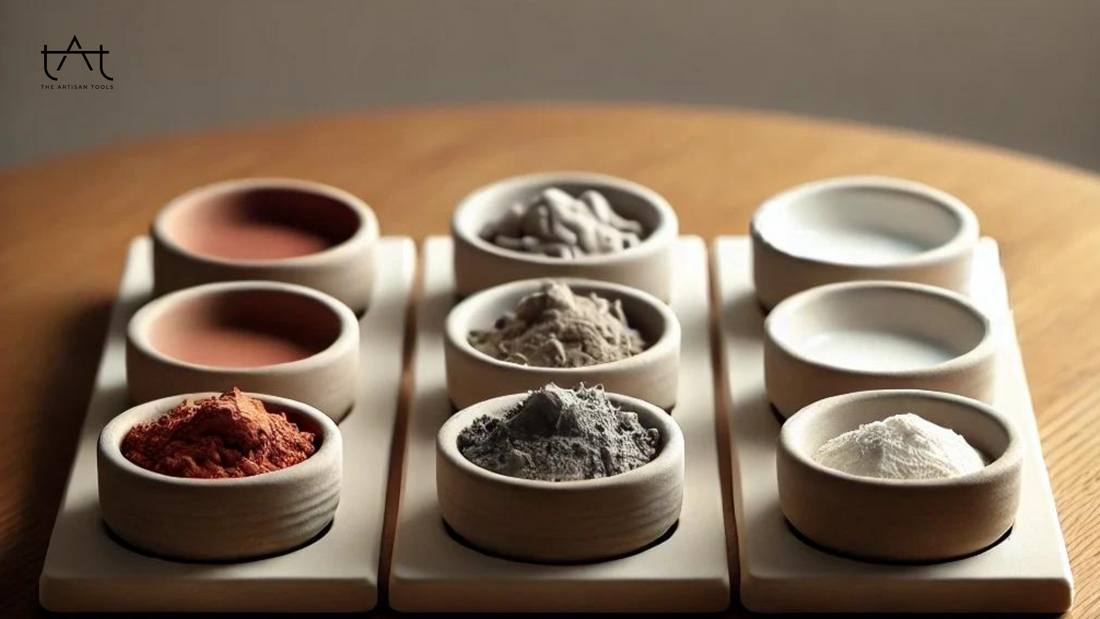
Basic Guide to Clay Types for Potters
Clay is one of the oldest and most versatile materials humans have used to create objects. If you’re just starting out in the world of ceramics, it can be a bit overwhelming to know which type of clay to use for your projects. In this article, we’ll explain the most common types of clay in a simple way and give you some useful tips to start working with it.
What is clay and how is it used?
Clay is a natural material formed by the decomposition of rocks. Its plastic texture makes it easy to shape when it’s wet, and it hardens as it dries or is fired in the kiln. Ceramics are created mainly by firing clay at high temperatures, which turns it into a durable, resistant material.
Below are the most common types of clay you’ll probably use in your projects.
1. Red Earthenware (Terracotta)
This type of clay is the most common for beginners, as it’s easy to handle and quite affordable. It has a reddish or brown colour and is fired at relatively low temperatures (between 950°C and 1060°C). Ideal for:
- Sculpture
- Decorative ceramics
- Large objects such as planters and vases
Tip: Earthenware is porous, which means that if you don’t glaze it, it will absorb water.
2. Stoneware Clay
Stoneware is stronger and is fired at higher temperatures (between 1200°C and 1300°C). When fired, it becomes non-porous and extremely strong. It’s very popular for functional ware such as plates and mugs. Ideal for:
- Plates, mugs and tableware
- Decorative pieces
Tip: If you want to make pieces that can safely hold food, stoneware is an excellent option.

3. Porcelain
Porcelain is the finest and most difficult type of clay to work with, but it produces very delicate and beautiful results. When fired at very high temperatures (between 1200°C and 1450°C), porcelain becomes white, smooth and slightly translucent. Ideal for:
- High-end decorative pieces
- Fine tableware
- Detailed sculpture
Tip: Porcelain is tricky to handle because it tends to be less plastic than other clays, which makes it more likely to crack or break while you’re working with it. But if you’re patient, the results are incredible.
Preparation and tips for working with clay
Before you begin, there are a few important things to keep in mind to help your project turn out well.
1. Storing your clay
Keep your clay in well-sealed plastic bags to prevent it from drying out. If the clay does dry, don’t throw it away! You can reuse it by adding a bit of water and wedging it thoroughly.
Hack: some people use old freezers or fridges (unplugged) because they seal very well and keep air out.
2. Drying and firing
Let your piece dry completely before putting it in the kiln. This will help prevent cracking or even explosions in the firing.
3. Firing
Clay must be fired in a kiln designed for ceramics. High temperatures are essential for the clay to mature and become durable. We’ll publish more posts about different types of kilns in the future.