
Bisque Firing in Ceramics: Basics and Practical Tips
Share
What is bisque firing and why is it important?
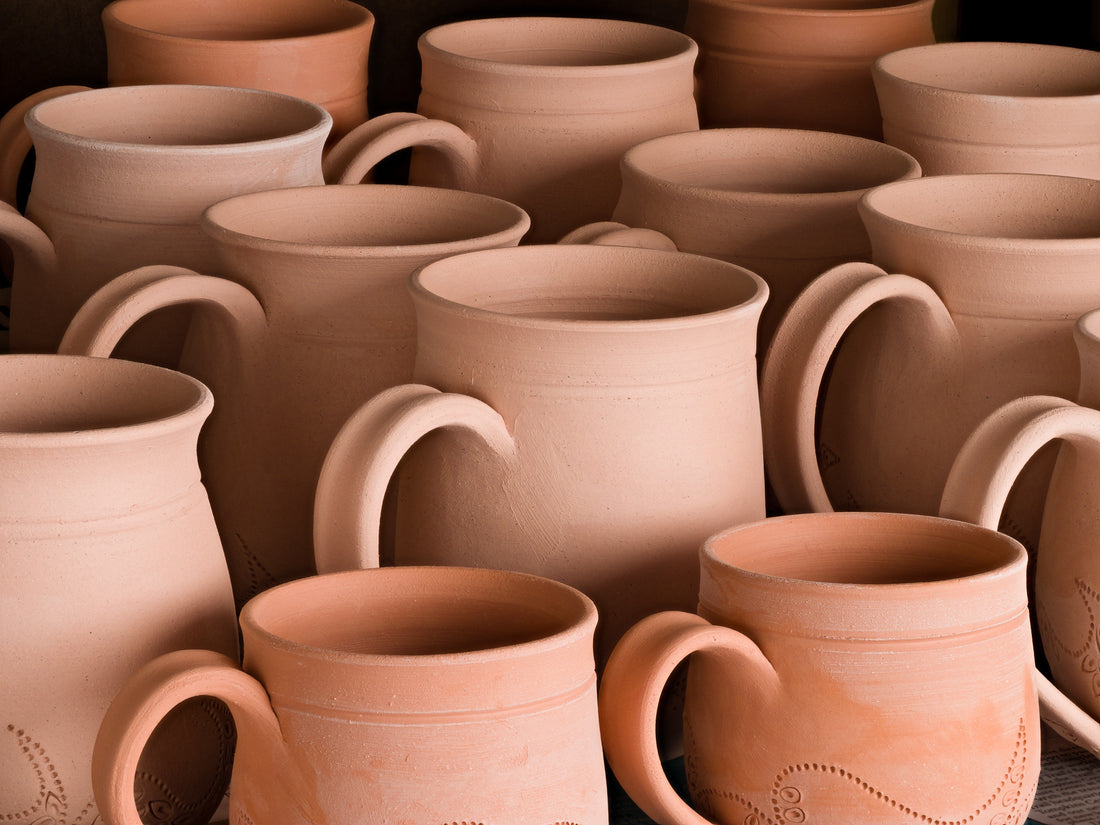
Remember that bisque firing is the first firing, the one where the shape of the piece is fixed and becomes permanent. After this stage, the ware can be handled easily, for example when applying glaze.
Bisque firing starts slowly, increasing the temperature in steps of about 100–150 °C until you reach around 500 °C. Once you get to that point, the water in the clay has disappeared, and from there you can raise the temperature more quickly. Bisque firings are usually done between 960 and 1000 °C.
Tips:
- Wait until the piece is completely dry before firing it.
- You can stack or pack the pieces more tightly in a bisque firing to maximise kiln space and efficiency. For example, it’s fine if the pieces touch each other during the bisque.
- Don’t fit the mouths of pots into the bases of others, because the clay shrinks and they may crack or break.
- Depending on the kiln, some potters leave peep holes or the lid slightly open up to the mentioned 500 °C. To know if all the water has evaporated and you can start increasing the temperature more quickly, some ceramists place a small glass object at the flue. If it still fogs up, there’s still moisture inside and they raise the temperature a bit more. Be careful not to burn yourself.